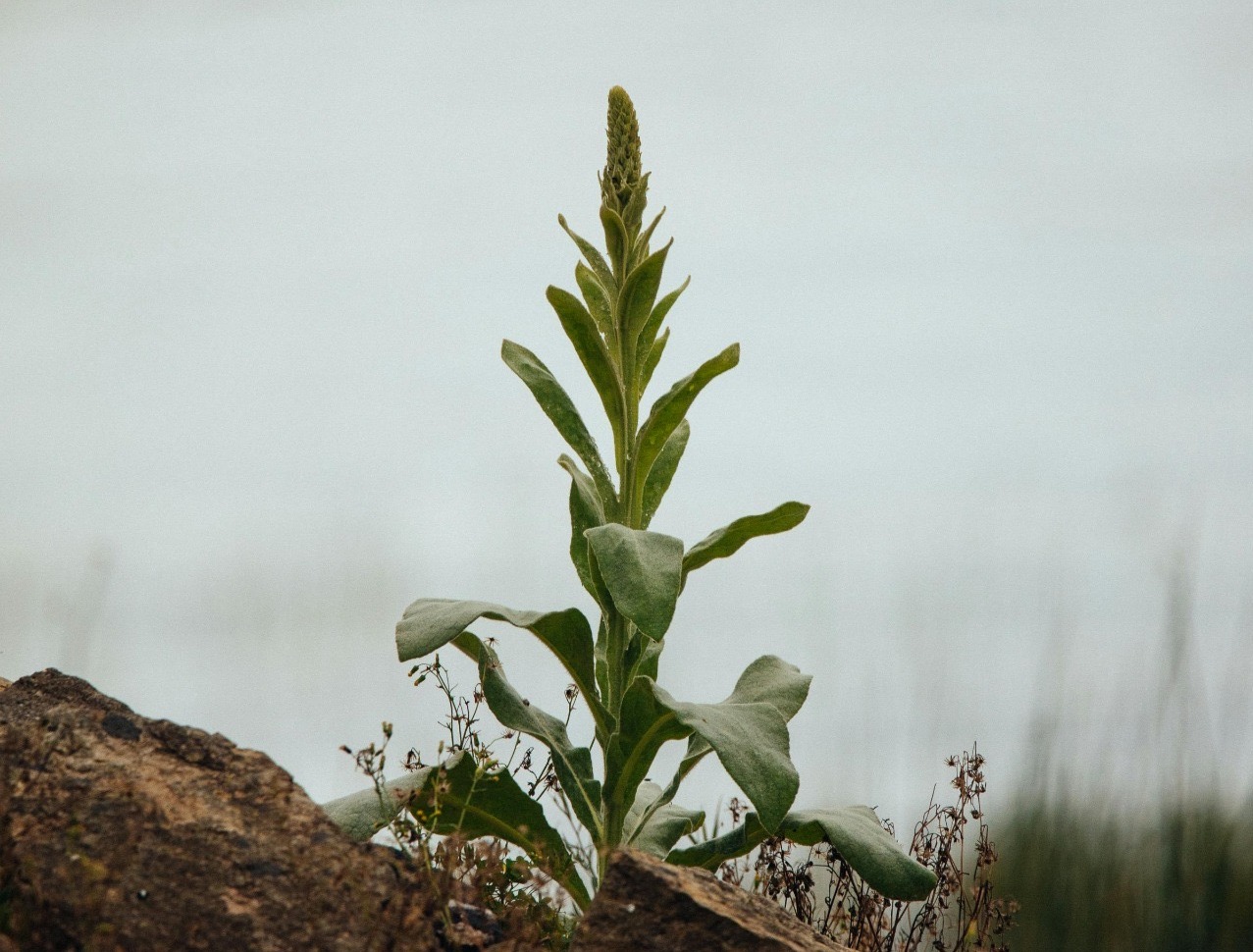
There is a Verbascum thapsus growing out of a stone wall in one of the gardens I oversee. It appeared last year, and protected by the cover of a rose that had begun suckering and so has since been removed, went undetected by those who would have it pulled out. Without its rosy screen it now plays a starring role in this long border, and I absolutely love it. The border itself is very beautiful; various pink roses underplanted with Astrantia ‘Roma, Polystichum polyblepharum, Alchemilla mollis and great clumps of Veronicastrum virginicum ‘Fascination’, and still the verbascum brings me the greatest pleasure. I can already imagine how spectacular it’ll look when its lemon coloured flowers pierce all of that sugary pink. My mouth waters.
For me, these surprising interruptions in design are like an artist’s final brush stroke, the finishing touch. I have a very strong memory from childhood, visiting a garden while holidaying in Devon. It was a potager really, a mix of flowers and vegetables, a considered jumble looking lovely as you’d expect, when I rounded the corner to be confronted with the first Echium pininana I’d ever seen rising out of this quaint border. Barging in between the Rosemary and the Marigolds, the unapologetic individualist at the party, its completely ‘out-there’ presence magnetically drew me in. Maybe this vivid mental image has had a lasting effect and is why I feel so charmed by the serendipitous delights that occur when working with plants.
Or maybe it’s something about the resilience of nature that entrances me. My verbascum isn’t hanging on for dear life, clinging to a smear of substrate within the crack in the wall, it’s positively thriving. It’s found its perfect place and by this a conversation between the design and wilder nature has begun. It’s not uncommon for people to appear embarrassed by the state of their gardens when we visit them for the first time and they apologise, “I’m sorry there’s this scruffy bit here I don’t know what to do with it” and “it’s gone a bit wild, we’ve lost control!”. This is entirely unnecessary and as a designer it can often be helpful to see what is choosing to grow where. We can learn a lot about the conditions available within a garden by paying attention and it’s one of the ways we can be sure we’re selecting the right plants moving forward.
Good design takes this conversation between the land and the people who inhabit it seriously. Creating a garden is not the same as choosing fabric for your curtains and rearranging the furniture. It’s about attuning to the landscape, listening to the client, considering the wildlife that already calls this space home, and curating a balance between all three. And the conversation does’t end once the design is implemented but continues forever more, and if we listen and watch and learn, the garden will become more and more beautiful and more and more rewarding to those who inhabit it as time goes on, as adjustments are made, and we carefully, quietly edit the wildness, taming a little here, embracing a little there. It’s a living, inhabitable artwork.
Of course stand out moments in garden design are not entirely left up to happenstance but can be designed into the garden in a miriad of ways. The driftwood totems that punctuate the planting at Derek Jarman’s Prospect Cottage, dramatic in their numbers and construction from found materials from the wider landscape, link the garden to the surrounding land in an expressive and artistic way. It is unexpected and lends to the atmosphere of ritual and talisman that has been created here.
Tom Stuart-Smith’s courtyard at the Barn Garden with its repeating raised pools, mirrors to the sky and overhanging foliage, is a reflection of the history of the space, a gentle nod to the old corrugated iron buildings that once stood there. It is the formality and mirror-shine of the water that is so impactful, reflecting details which we might not have otherwise been drawn to. It becomes an experiential artwork and collaboration between the designer and the natural world as the plants emerge and fade with the changing seasons and the water responds to the weather.
The list could go on and on and truly on forever but the important thing to note is how powerful and how important design can be. It’s ability to connect us to the world we inhabit, the lifeforms we share it with, the history and eternal evolution of it, the responsibiltiy to it and most of all the pleasure we can experience from it. Good design, makes us see, makes us explore our world so that it cannot pass us by.